
Restraining Orders & Safety Resources

Information on Petitioning for a Restraining Order / Injunction Protection
The Florida Statutes provide for distinct types of injunctions for protection against the five (5) types of interpersonal violence: DOMESTIC VIOLENCE, DATING VIOLENCE, REPEAT VIOLENCE, SEXUAL VIOLENCE, STALKING / CYBERSTALKING and (1) against the abuse, neglect, and exploitation of VULNERABLE, ELDERLY OR DISABLED ADULTS. Injunctions may be temporary or permanent; they may be dissolved, modified, or extended, depending on the circumstances. The proceedings are civil in nature; however, the violations are criminal. An Injunction protection order (restraining order) can also be filed by a parent or legal guardian on behalf of a MINOR CHILD or JUVENILE.
Types of Restraining Orders

Domestic Violence
Get more information about Injunction Protection "Restraining Order" for victims of:
Domestic Violence
Dating Violence
Get more information about Injunction Protection "Restraining Order" for victims of:
Dating Violence
Repeat Violence
Get more information about Injunction Protection "Restraining Order" for victims of:
Repeat Violence
Sexual Violence
Get more information about Injunction Protection "Restraining Order" for victims of:
Sexual Violence
Stalking / Cyberstalking
Get more information about Injunction Protection "Restraining Order" for victims of:
Stalking / Cyberstalking
Vulnerable Adults
Get more information about Injunction Protection "Restraining Order" for victims of violence, abuse, or neglect against:
Vulnerable Adults
Children and Juveniles
Get more information about Injunction Protection "Restraining Order" for victims of violence, abuse, or neglect against:
Children and JuvenilesWho Can File
If you have been a victim of:
- Domestic Violence
- Repeat Violence
- Dating Violence
- Sexual Violence
- Stalking or Cyberstalking
- Abuse, Neglect, and Exploitation of Elderly Persons and Disabled Adults or their guardian, caregiver, or conservator
What To Bring
- Photo ID for yourself
- Photo of the respondent/subject (if available)
- Information about the respondent/subject (address, workplace, date of birth (DOB), etc.)
- Important dates, notes, or incidents
- A copy of a police report (if available but not required)
Download Forms
To print or pre-fill any injunction or restraining order forms, please visit the Florida State Courts System Self-Help Center website, maintained by the Office of the State Courts Administrator. This site provides the most current Petition for Injunction forms.
Please use the link below and enter “Injunction” in the Family Court Forms search bar to locate the appropriate forms.
The Clerk of Court’s Family Intake Unit will provide forms and assist with paperwork.
Where to File (In Person)
If you have been a victim of Domestic Violence, Dating Violence, Repeat Violence, Sexual Violence, or Stalking, you can file a Restraining Order through two (2) locations in Broward County.
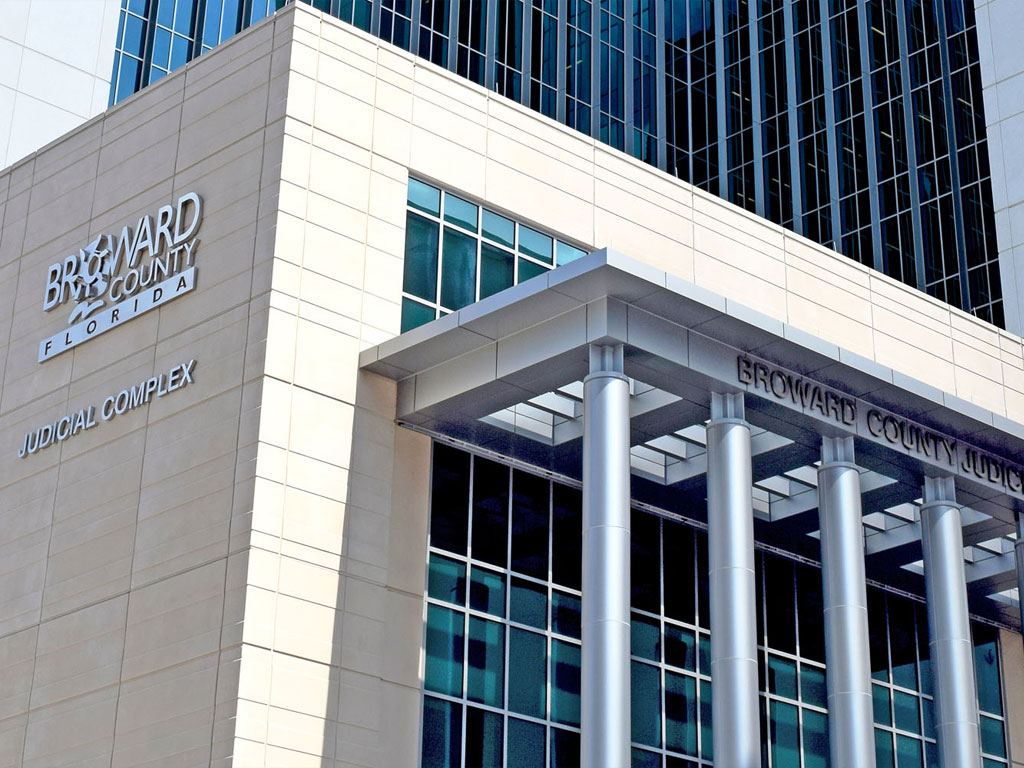
Broward County Main Courthouse
201 SE 6th Avenue, Fort Lauderdale, FL
Room #02140
Monday – Friday | 8:30 AM – 5:00 PM
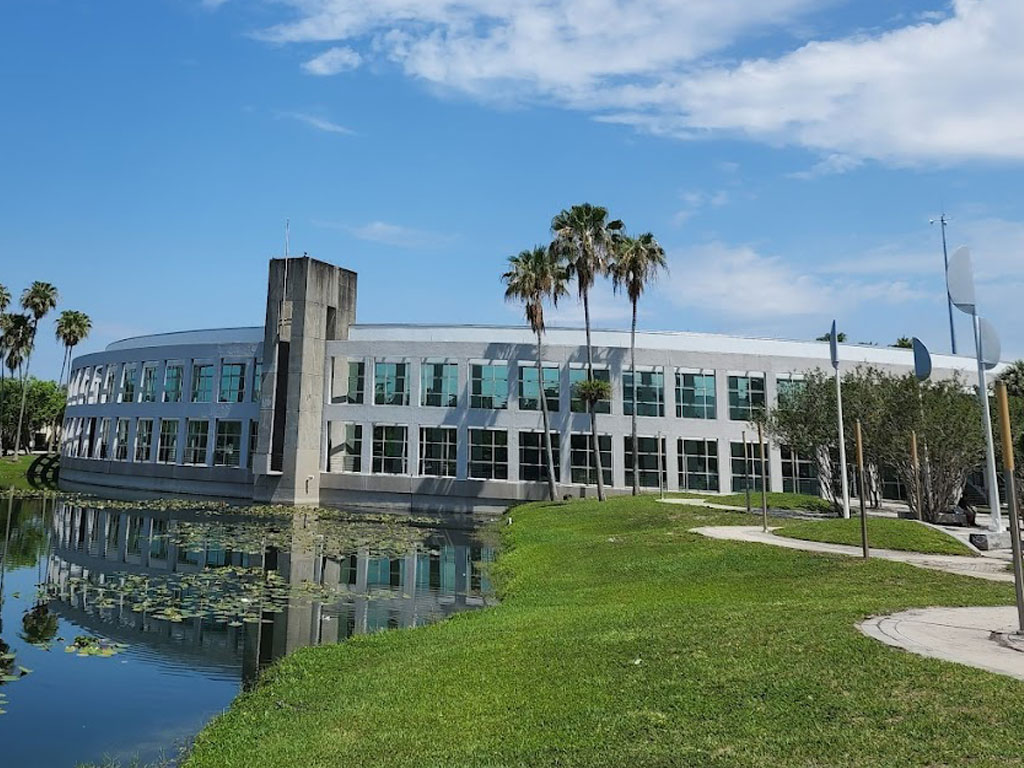
Broward County West Courthouse
100 North Pine Island Road, Plantation, FL
Room #180
Monday – Friday | 8:00 AM – 2:00 PM
Emergency Restraining Orders
Emergency restraining orders under the Domestic Violence Statute are available after 5:00 pm or on weekends and holidays. To access the emergency procedures, you should contact the Women in Distress Crisis Line at 954-761-1133.
- After 5:00 PM
- Weekends & holidays
Women in Distress Crisis Line: 954-761-1133 (24 hours / 7 days) *Services are available to all people regardless of gender or gender identity.
There are no court fees to file. The process may take several hours.
What's Next After My Injunction Is Approved?
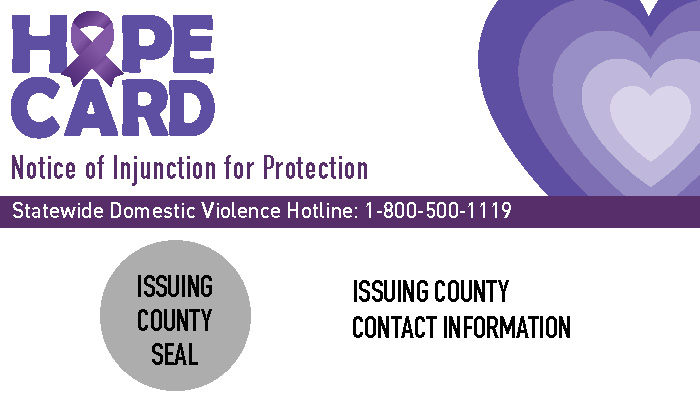
Request a Hope Card: A Hope Card is a free, wallet-size card that proves you have a final injunction for protection.
Effective October 1, 2024, pursuant to Florida Statute 741.311, a new initiative is available to enhance safety and provide peace of mind for those who have secured final injunctions for protection against various forms of violence and abuse. A petitioner may now request the Clerk's Office to issue a Hope Card after the court issues a final judgement of injunction for protection under the following Florida Statutes:
Eligible Injunctions
- F.S. 741.30 - Domestic Violence
- F.S. 784.046 - Repeat Violence, Sexual Violence, Dating Violence
- F.S. 784.0485 - Stalking
- F.S. 825.1035 - Abuse, Neglect, and Exploitation of Elderly Persons and Disabled Adults
Having a Hope Card offers several significant benefits:
- Immediate Verification: The card acts as an official, easily recognizable proof of a valid protective order. It simplifies the process for law enforcement and other authorities to verify the existence and details of the injunction, ensuring quicker responses and enhanced protection.
- Enhanced Safety: With a Hope Card in hand, individuals can confidently demonstrate their protected status during encounters with law enforcement or other entities, minimizing the risk of confusion or miscommunication.
- Accessible Support: The card serves as a constant reminder of the legal protections in place and provides direct access to support resources and information tailored to help individuals navigate their safety plan.
How do I Request a Hope Card?
If you have a final injunction for protection, the process of obtaining a Hope Card is straightforward and free of charge.
- Simply refer to the order of protection issued by the 17th Judicial Circuit Court, when completing the Hope Card Request Form.
- Submit the completed Hope Card Request Form to the Clerk's office for processing, to the division the protective order was issued.
- Upon receipt, the Clerk's Office will produce the requestor, within three (3) business days, a wallet-size Hope Card that will serve as a crucial tool that presents important information about final injunctions for protection.
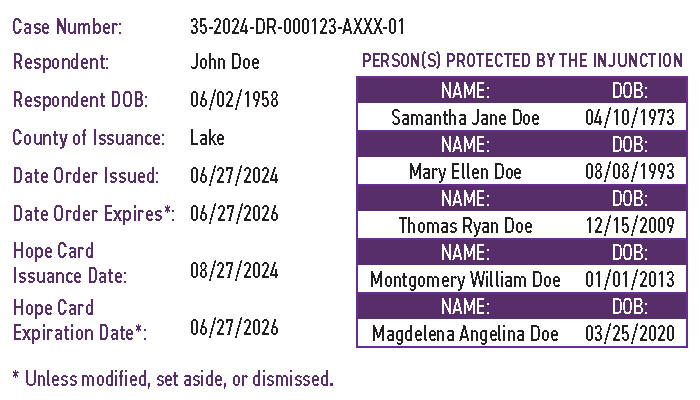
- Hope Cards are valid for two years after the issuance date of a final order or the expiration date of the injunction, whichever comes first.
What Information Is Included on a Hope Card?
- Respondent’s name and date of birth
- Name and date of birth of the petitioner or protected person
- Information regarding:
- Issuing court
- Case number
- Date the injunction was issued
- Expiration date, if any, of the injunction
- Telephone number for the statewide domestic violence hotline
- Date of issuance and expiration date of the Hope Card
What Information Is Included on a Hope Card?
Issued Hope Cards will be valid for two years or until the injunction expires, whichever occurs first, but may be renewed if the injunction remains in effect. A Hope Card may be renewed after the two year period if the underlying injunction remains in effect.
Childcare & Court Rules
- Children are not permitted in courtrooms
- Childcare is available only for domestic violence cases
- Ages: 6 months – 13 years
- Hours: 8:30 AM – 5:00 PM
- Referral required in advance
- No walk-ins accepted
- Children may never be left unattended at the courthouse.
Language Assistance: Interpretation assistance is available upon availability.
Support & Help
- Women in Distress Hotline: 954-761-1133
*Services are available to all people regardless of gender or gender identity. - Available 24-hours a day
- Counseling & shelter available
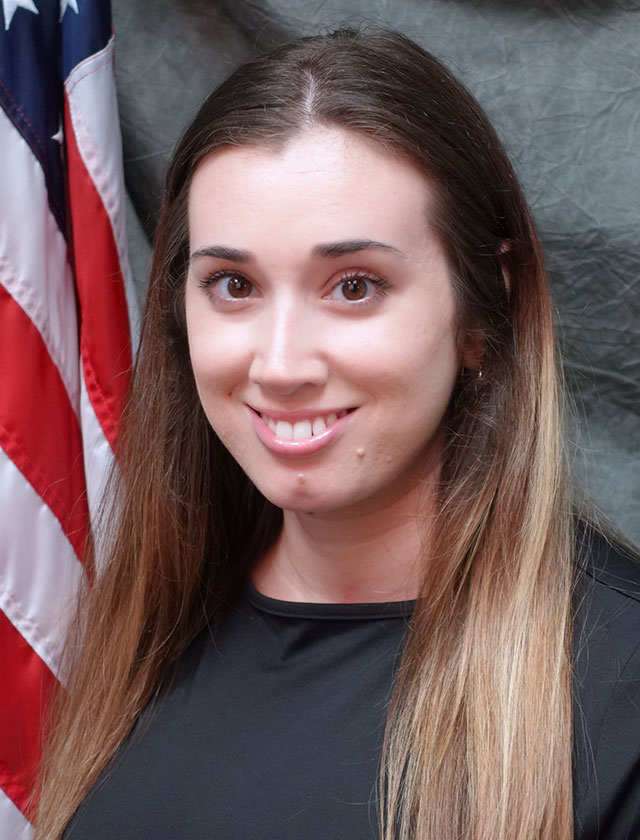
Katelyn Pipota-Lundell
Victim Advocate
954-956-1419
KPipota@coconutcreek.gov
Coconut Creek Police Department
4800 West Copans Road
Coconut Creek, FL 33063
Services provided include:
- Explaining your rights and your role within the criminal justice system
- Personal Advocacy
- Information and assistance regarding the Victim Crime Compensation Program
- Information and referrals to community based organizations
- Crisis intervention
- Guidance and support through the criminal justice system
- Assist with the return of property
- Intervene with landlord and creditors when a criminal case is pending
- Seek emergency shelter for domestic violence and sexual assault victims
- Transportation when applicable

Det. Jean Saint-Amour
For questions in relation to Restraining Orders / Injunction Protection email
JSaintAmour@coconutcreek.gov